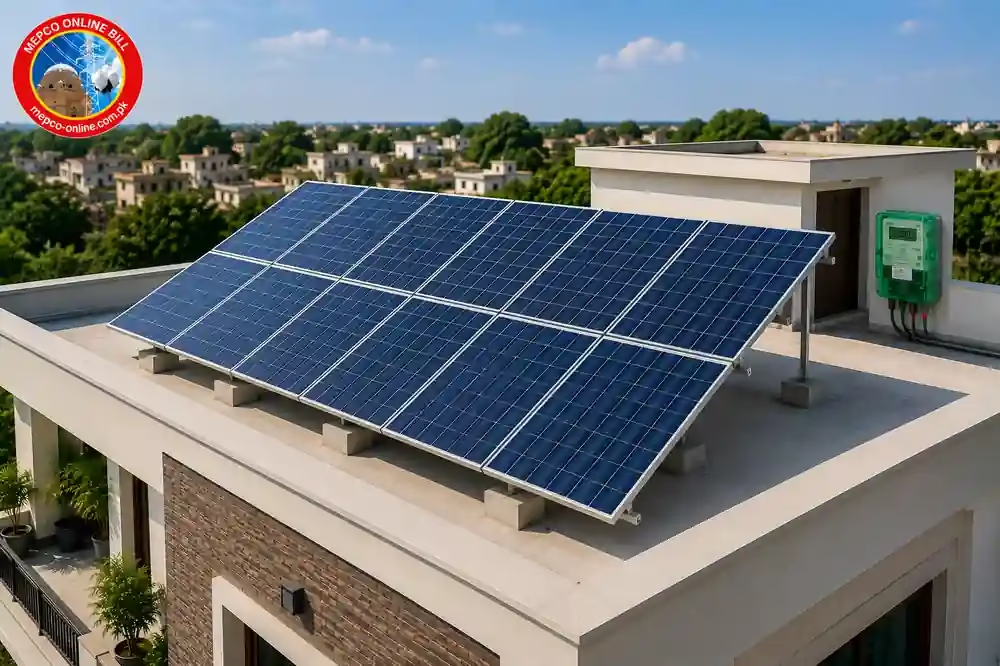
Solar System NEPRA License

Does Every Solar User in Pakistan Need a NEPRA License in 2026?

The Truth About NEPRA’s New Solar Rules in Pakistan (2026)

Many people in Pakistan are confused about the new Solar System NEPRA License rules in 2026. Over the last few weeks, many people in Pakistan have become confused about new solar rules. Social media posts are claiming that every solar user now needs a NEPRA license and must pay monthly charges.

Naturally, this created panic among homeowners using solar systems.

Most of the viral claims are either incomplete or misleading.

The rumor spreading across WhatsApp and Facebook goes something like this:

  • Every solar owner must get a license from NEPRA.
  • There’s a fee of Rs. 1,000 per kilowatt — charged every month.
  • People without registration may face penalties.
Solar System NEPRA License in Pakistan.

So naturally, people with 5kW or 10kW systems are doing the mental math and worrying about paying Rs. 5,000 to Rs. 10,000 every single month just to keep their solar running. For many families, that would be impossible to afford. But that’s not what the policy says — not even close.

Check your MEPCO bill online

February 9, 2026 — From Net Metering to Net Billing

The first big change happened on February 9, 2026, when NEPRA officially retired the old net metering system and introduced net billing in its place.

Here’s what that actually means in plain terms:

Want to understand all the new rules, rates, and consumer impacts? Read our complete MEPCO Net Metering New Policy 2026 guide.

Simple Difference Between Old and New System

Old Net MeteringNew Net Billing
You send 1 unit to the gridYou get 1 unit back freeYou earn Rs.11
You take 1 unit from the grid at nightCharged at standard ratePay around Rs. 27 per unit
Contract lengthUp to 7 years5 years

Under the old system, it was a clean swap — send a unit during the day, get it back at night for nothing. The new system pays you for what you export, but then charges you a higher rate when you draw power in the evening.

If you already had a net metering contract before February 9, 2026, you don’t need to worry. Your existing agreement stays in place until it expires. The new rates only apply to fresh connections going forward.

April 9, 2026 — NEPRA Takes Over the Licensing Process.

This is the change that’s causing all the confusion.

Before April 9, 2026, if you wanted to connect your solar system to the National grid and sell your extra solar units, you’d apply through your local power company for example, MEPCO, LESCO, FESCO, and so on. For systems up to 25kW, that license was free.

That changed. Here’s what’s different now:

  • NEPRA has centralized the licensing process, taking it out of the hands of local DISCOs
  • The previously free license for systems up to 25kW no longer exists
  • A processing fee of Rs. 1,000 per kW now applies — but it’s a one-time charge, not monthly

So for a 5kW grid-connected system, you’d pay Rs. 5,000 once. That’s it. Not every month, not every year. A single payment to process your application.

Why did NEPRA make this move? Because consumers had been complaining for years that local distribution companies were dragging their feet — or outright refusing — to issue licenses. The goal was to make the approval process faster and easier for solar users.

And honestly, this is the main misunderstanding online.

These rules only apply to people who want to sell their extra electricity units back to the national grid — what’s called a net billing connection. If that’s not you, none of this applies to your situation at all.

Here’s a straightforward breakdown:

Your SetupLicense Required?Any Fee?
Solar + battery, using power yourselfNoNone
Off-grid solar, no grid connectionNoNone
Hybrid system, not selling to gridNoNone
New grid-tied system with net billingYesRs. 1,000/kW, one time
Existing net metering contract (pre Feb 9)Already coveredNo change

If you have solar panels on your roof, store extra power in batteries, and use it all yourself — you are completely outside the scope of these new regulations. No license, no fee, no registration.

The new Solar System NEPRA License rules mainly affect people using grid-connected solar systems.

If there is any error in your bill regarding wrong reading and over bill then Click MEPCO bill correction guide here.

Absolutely. But people now need to use solar a little more wisely.

The old net metering setup was genuinely favorable because every unit you sent to the grid was one you could take back for free later. That math no longer works the same way. Under net billing, you’re selling at Rs. 11 and buying back at Rs. 27 — a significant gap.

That means the best strategy now is to use your heavy-load appliances — air conditioners, water pumps, washing machines — during peak solar hours between roughly 10 AM and 3 PM, when your panels are producing the most. Try to use more electricity during the daytime when your panels are producing maximum power.

This is also why many people are now adding batteries to their solar systems. If you store extra solar power during the day, you can use it at night and reduce expensive electricity usage. Given how high electricity bills have climbed in Pakistan, the savings are still very real.

Even after these changes, solar can still save a lot of money in Pakistan. The rules for grid exporters have changed, but for the majority of households running self-consumption systems, nothing has shifted.

So if you’re only using solar for your own home, there is no need to panic.

For most normal households, nothing major has changed.

The Short Version

  • Monthly fee just for having solar? False.
  • Everyone needs a NEPRA license? False.
  • Something has changed? Yes — but only for people selling electricity to the grid.
  • One-time processing fee for new grid-tied connections? Yes — Rs. 1,000 per kW, paid once.
  • Existing net metering customers affected? No — your contract continues as-is.

If you’re planning a new installation and want grid connectivity for net billing, budget for the one-time NEPRA processing fee. If you’re going with a standalone or battery-backed system for personal use, ignore all of this and install with confidence.

If you need to replace a faulty or damaged electricity meter, read our complete Mepco Meter Replacement Process Guide.

Best Strategy in 2026

Try to run heavy appliances during daytime solar hours.

For example:

  • Air conditioners
  • Washing machines
  • Water pumps
  • Irons

Best timing:

10 AM to 3 PM

During these hours, your solar panels produce maximum electricity.

You can see the complete contacts detail in MEPCO HELPLINE NUMBERS

This article is based on NEPRA’s regulatory changes effective February 9, 2026 and April 9, 2026. For advice specific to your situation, speak with a licensed solar installer or check NEPRA’s official website.

For personalized guidance, consult a licensed solar installer or visit NEPRA’s official website.

FAQs

No. A NEPRA license is only required for people who want to connect their solar system to the national grid and sell extra electricity through net billing.Most off-grid users do not need a Solar System NEPRA License in Pakistan.

No. The viral news about monthly solar charges is false. The Rs. 1,000 per kW fee is a one-time processing fee, not a monthly payment.

NEPRA now charges a one-time processing fee of Rs. 1,000 per kW for new grid-connected solar systems under net billing.

For a 5kW grid-connected system, the one-time fee would be around Rs. 5,000.

No. If your solar system is completely off-grid and not connected to the national grid, you do not need any NEPRA license or registration.

Under old net metering, exported electricity units could be used later for free. Under net billing, exported electricity is purchased at a lower rate, while imported electricity is charged at a higher rate.

No. People who already had approved net metering connections before February 9, 2026 can continue under their existing agreements until their contracts expire.

Yes. Solar can still reduce electricity bills significantly, especially if you use heavy appliances during daytime solar hours or add battery storage.

No. Hybrid systems that use batteries and do not export electricity to the grid do not require a license.

The best time is usually between 10 AM and 3 PM because solar panels produce maximum electricity during these hours.

No. Battery-based and off-grid solar systems usually do not need a Solar System NEPRA License because they are not exporting electricity to the national grid.

You can calculate your Mepco bill by MEPCO BILL CALCULATOR

Leave a Reply

Your email address will not be published. Required fields are marked *